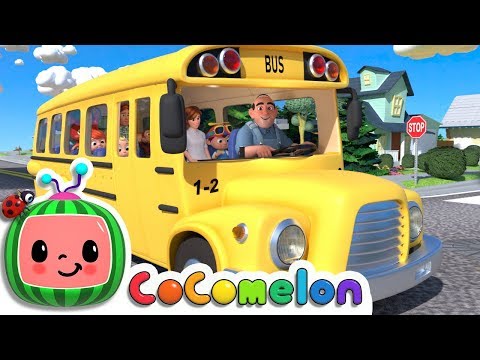
The full story of Wheels On The Bus Go To Town | Nursery Rhymes & Kids Songs - Baby Car Songs TV
An original, data-driven analysis built from YTBVC's own tracking - view velocity, rankings, milestone projections and earnings estimates YouTube doesn't publish.
The road to one billion views
The video Wheels On The Bus Go To Town | Nursery Rhymes & Kids Songs - Baby Car Songs TV was published on April 03, 2024, and has been online for about 2.3 years. In this time, it has accumulated a substantial following, with its view count currently standing at 1.10 billion. The video's age and average daily views of approximately 1,396,671 imply that it has maintained a steady pace in gaining popularity. This consistent viewership suggests that the video tends to appeal to a wide audience, likely due to its nursery rhyme and kids song content, which appears to be evergreen in nature.
Given its average daily views, the video's trajectory can be characterized as stable and enduring. The fact that it has gained a significant number of views in a relatively short period implies that it has likely benefited from being part of a popular channel, Baby Car Songs TV, which is based in the US. The video's performance over time also suggests that it has been able to sustain its appeal, possibly due to its relevance to its target audience, which appears to be young children and their parents or caregivers. As a result, the video has been able to maintain a strong presence online, with its views continuing to grow at a steady rate.
The video's views gained in the last 30 days, approximately 41,900,154, further underscore its enduring popularity. This recent surge in views is consistent with its overall average daily views, indicating that the video's appeal has not waned over time. Instead, it appears to be continuing to attract new viewers, while also retaining its existing audience. This trend is likely driven by the video's engaging content, which seems to be well-suited to its target audience. As the video is projected to reach 2 billion views in about 641 days at its current pace, it is likely that its popularity will continue to endure, with its views expected to grow steadily over the coming months.
The video's performance also provides insight into the broader trends in online video consumption. The fact that a nursery rhyme and kids song video has been able to achieve such a high level of viewership suggests that this type of content tends to be highly popular among young children and their parents or caregivers. This, in turn, implies that channels like Baby Car Songs TV, which specialize in this type of content, are likely to be well-positioned to attract large audiences. Furthermore, the video's estimated ad earnings of approximately $33,520 per month, at a rate of $0.80 per thousand views, highlight the potential for creators to monetize their content effectively, particularly if they are able to achieve high levels of viewership.
Overall, the video's trajectory, from its publication in April 2024 to its current status as a billion-view video, is a testament to the enduring appeal of nursery rhymes and kids songs. The video's stable and consistent viewership, combined with its projected continued growth, suggest that it is likely to remain a popular destination for young children and their parents or caregivers for some time to come. As such, it provides a useful case study for understanding the factors that contribute to a video's success, and the ways in which creators can effectively engage with their target audiences.
A billion-view milestone in context
Wheels On The Bus Go To Town, an entry in the nursery rhyme catalog provided by the Baby Car Songs TV channel, serves as a notable example of the enduring reach of children's media within the digital landscape. As of the most recent data tracking, the video has accumulated 1,104,299,398 total views. This performance places the video at the 860th position among the 1,032 videos currently identified as having surpassed the one-billion-view milestone. Within the music category specifically, the video holds the 524th rank out of 641 qualifying entries.
The achievement of crossing one billion views signifies a substantial level of sustained viewer engagement, particularly for content published as recently as April 3, 2024. Over the course of its approximately 2.3-year history on the platform, the video has maintained a consistent trajectory that distinguishes it from more volatile viral trends. While the primary language of the content remains unclassified, the channel operates from the United States, suggesting that the viewership likely spans a broad international demographic characterized by younger audiences and caregivers seeking familiar educational or entertainment media.
The current velocity of this video remains significant, with approximately 41,900,154 views gained within the last 30 days alone. This equates to an average of roughly 1,396,671 views per day. At this steady rate of growth, it is projected that the video will reach the two-billion-view threshold in approximately 641 days. Beyond the raw metrics, this performance yields a measurable economic footprint for the creator; based on an estimated revenue per mille of 0.80 dollars, the video generates roughly 33,520 dollars in ad earnings per month.
For the purposes of this analysis, these figures offer a snapshot of a video that has transitioned from a new upload into a foundational asset for its host channel. Because children's content tends to benefit from high rates of repeat viewership, the steady daily accumulation of views appears to be a hallmark of the genre. By maintaining a place in the upper echelon of the billion-view club, the video demonstrates how repetitive, thematic programming for children continues to represent a core pillar of high-traffic content on the platform. The data suggests that as long as the video remains an accessible resource for its target audience, its long-term growth potential remains as reliable as its daily average would indicate.
Current momentum and view velocity
The current performance trajectory of Wheels On The Bus Go To Town indicates that the video maintains a robust and consistent presence within the nursery rhyme segment of the platform. As of the most recent tracking period, the video has garnered approximately 41,900,154 views over the preceding 30 days. This monthly performance translates to an average daily viewership of roughly 1,396,671, a figure that highlights the enduring utility of educational and entertainment-based children’s content in sustaining long-term audience engagement. Such consistent daily velocity suggests that the video remains a frequently utilized resource for viewers, likely serving as a recurring selection for younger audiences or caregivers seeking repetitive, accessible content.
Despite being published on April 03, 2024, the video has already secured a significant total of 1,104,299,398 views, placing it at rank 860 among all videos that have surpassed the one-billion-view threshold. Within the broader Music category, it currently holds the 524th position out of 641 entries. The fact that the video continues to command over one million views each day, more than two years after its release, demonstrates a stable growth pattern rather than a plateau. While many viral music videos experience a sharp decline in interest following an initial surge, this title appears to benefit from the evergreen nature of children’s songs, which tend to be discovered by new cohorts of viewers on a cyclical basis.
If the video continues to perform at this current average daily rate, projections indicate it could reach the 2 billion view milestone in approximately 641 days. This sustained velocity provides a degree of financial consistency for the channel, with estimated ad earnings calculated at approximately 33,520 dollars per month, assuming an RPM of 0.80. The data suggests that the video is well-positioned for continued growth, as it shows few signs of the volatility often associated with trending social media content. Instead, its steady accumulation of views reflects a reliable, institutional role within the nursery rhyme landscape of the platform, where its longevity is supported by an ongoing stream of passive, search-driven viewership that shows little sign of deceleration.
Global reach and where it resonates
The video Wheels On The Bus Go To Town | Nursery Rhymes & Kids Songs - Baby Car Songs TV is likely to resonate with audiences in English-speaking countries, given that the channel Baby Car Songs TV is based in the US. Although the primary language of the video is unknown, it can be inferred that the content is probably in English, as the channel's country of origin tends to influence the language of its content. This inference, combined with the video's significant view count, suggests that the video may be particularly popular in the US, as well as other English-speaking countries such as the UK, Canada, and Australia.
The video's global reach is also likely to extend to other regions where English is widely spoken or where there is a significant interest in nursery rhymes and kids' songs. For instance, countries with a large number of expatriates or international schools may also have a sizable audience for this type of content. Additionally, the fact that the video has gained a substantial number of views in a relatively short period, with an average of around 1,396,671 views per day, indicates that it has managed to transcend geographical boundaries and appeal to a broad audience. However, it is essential to note that these are reasoned inferences based on the channel's country of origin and the video's language, rather than measured geographic data.
The significant number of views gained by the video in the last 30 days, approximately 41,900,154, further supports the notion that it has a substantial global following. The video's popularity appears to be sustained, with a steady stream of views that is likely to continue in the coming months. As the video is projected to reach 2 billion views in about 641 days at its current pace, it is probable that its global reach will continue to expand, potentially introducing the content to new audiences in various regions. The estimated ad earnings of around $33,520 per month also suggest that the video has a considerable commercial appeal, which may be attributed to its widespread popularity.
It is worth noting that while the video's primary audience may be in English-speaking countries, its appeal is not limited to these regions. Nursery rhymes and kids' songs tend to be universally popular, and the video's colorful animation and catchy melody may appeal to children and parents from diverse cultural backgrounds. As a result, the video may also be popular in countries where English is not the primary language, but where there is a significant interest in this type of content. Ultimately, the video's global reach and resonance can be attributed to a combination of factors, including its engaging content, the channel's reputation, and the widespread availability of the video on the YouTube platform.
Who is watching
The primary viewership for Wheels On The Bus Go To Town appears to be composed of young children and toddlers, a conclusion drawn from its classification within the music category and the specific nature of nursery rhymes as a genre. Given that the content focuses on repetitive, rhythmic storytelling tailored for early childhood development, it is likely that the primary audience is non-adult. This demographic tends to consume content in environments supervised or facilitated by parents or caregivers, which may explain the video’s consistent performance over its two-year existence. The musical format, which centers on familiar repetitive structures, likely serves as a form of early auditory stimulation or entertainment within domestic or educational settings.
Because the video is produced by Baby Car Songs TV, a channel registered in the United States, there is a strong possibility that a significant portion of its viewership originates from English-speaking regions. However, the reliance on visual storytelling and melodic repetition suggests that the content may also appeal to global audiences regardless of primary language, as nursery rhymes often transcend linguistic barriers through their reliance on universal human activities and simple, recognizable motifs. It is reasonable to infer that the video functions as a visual aid for caregivers looking to occupy or educate infants during daily routines, which often leads to repeat viewings that contribute to the channel's high daily engagement.
The sustained velocity of the video, which currently gains approximately 41,900,154 views every thirty days, indicates a stable and recurrent viewership base. This consistency suggests that the video is frequently accessed through algorithmic recommendations or curated playlists designed for toddlers. While it is impossible to confirm precise viewing habits without internal data, the structure of the content strongly points toward a high frequency of repeat consumption, a common characteristic of videos within the children's entertainment genre. Furthermore, the projected trajectory toward two billion views in roughly 641 days implies that the interest in this specific iteration of the classic nursery rhyme remains robust. While the estimated monthly ad earnings of 33,520 dollars suggest a viable commercial model, the underlying success appears driven primarily by the enduring utility of the content for caregivers rather than targeted adult interest. Consequently, the audience is likely characterized by a high turnover of individual users as children age out of the demographic, requiring a constant influx of new viewers to maintain the current daily average of over 1.3 million views.
How it stacks up against its peers
When evaluating the performance of Wheels On The Bus Go To Town within the broader landscape of the platform, its position as the 860th most-viewed video out of 1,032 billion-view entries suggests a stable, secondary tier of popularity. While achieving a billion views is a significant technical milestone, this specific video occupies the lower quartile of the billion-view club. This indicates that while it serves as a reliable source of traffic for the Baby Car Songs TV channel, it functions more as a consistent performer within the children's entertainment genre rather than a singular cultural phenomenon that dominates the total volume of YouTube viewership.
Within the music category specifically, the video holds a rank of 524 out of 641 entries. This classification places it below the median of top-performing music videos, suggesting that its reach is specialized rather than universal. Given that the music category encompasses a vast array of high-budget global productions and viral hits, this ranking implies that Wheels On The Bus Go To Town relies heavily on evergreen appeal within the nursery rhyme segment. The audience for this content appears to be driven by repetitive consumption patterns typical of younger demographics, as the video sustains a steady daily intake of approximately 1,396,671 views despite being published relatively recently on April 3, 2024.
The consistency of this growth is perhaps the most notable aspect of its trajectory. By accumulating roughly 41,900,154 views in the last 30 days, the video maintains a pace that suggests a long-term viability for its channel owners. At its current average rate of viewership, the content is projected to reach the 2 billion view milestone in approximately 641 days. If this projection holds, the video would steadily ascend in the overall rankings. The estimated monthly ad revenue of 33,520 dollars, calculated at a 0.80 dollar RPM, reinforces the idea that this video functions as a high-efficiency asset for the US-based channel. While it may not currently compete with the most prominent global music videos in terms of peak viral velocity, its position as a persistent contributor to the billion-view club highlights the substantial, quiet market share held by children's educational and musical programming on the platform. It occupies a niche where longevity and steady, predictable performance are more impactful than short-lived, record-breaking spikes.
The estimated economics of a billion-view video
The estimated economics of a billion-view video such as Wheels On The Bus Go To Town | Nursery Rhymes & Kids Songs - Baby Car Songs TV, provide some insight into the financial aspects of highly viewed content. With an estimated monthly ad earnings of approximately $33,520, it is likely that the channel Baby Car Songs TV generates a substantial amount of revenue from this video alone. However, this estimate is based on an assumed revenue per mille (RPM) of $0.80, which may not accurately reflect the actual RPM, as this figure can vary greatly depending on several factors.
The RPM assumption of $0.80 is a crucial factor in estimating the ad earnings, as it represents the amount of revenue generated per 1,000 views. In reality, the actual RPM can fluctuate based on factors such as the region in which the video is being viewed, the format of the video, and the ad-share agreement between the channel and the video sharing platform. For instance, videos viewed in certain regions may generate higher RPMs due to higher demand for advertising in those areas. Additionally, the format of the video, such as its length, content, and audience engagement, can also impact the RPM. As a result, the estimated monthly ad earnings of $33,520 should be viewed as a rough estimate rather than an exact figure.
It is also important to consider that the estimated ad earnings are based on the current view count and viewing patterns of the video. With the video gaining approximately 41,900,154 views in the last 30 days, and an average daily view count of around 1,396,671, it appears that the video is still attracting a large audience. However, the actual ad earnings may vary from month to month due to changes in viewing patterns, ad-share agreements, and other factors. Furthermore, the estimated time it would take for the video to reach 2 billion views, approximately 641 days at the current pace, suggests that the video will continue to generate significant revenue for the channel in the coming months.
The channel's country of origin, the US, may also play a role in determining the actual ad earnings, as advertising demand and RPMs can vary by region. While the estimated ad earnings provide a rough estimate of the video's financial performance, it is likely that the actual figures are influenced by a complex array of factors, including the channel's target audience, the video's content and format, and the platform's advertising policies. As a result, the estimated monthly ad earnings of $33,520 should be viewed as a rough estimate, rather than a precise figure, and the actual ad earnings may be higher or lower depending on these various factors.
In conclusion, the estimated economics of a billion-view video such as Wheels On The Bus Go To Town | Nursery Rhymes & Kids Songs - Baby Car Songs TV, provide some insight into the financial aspects of highly viewed content. However, the estimated monthly ad earnings of $33,520 should be viewed with caution, as they are based on an assumed RPM and may not accurately reflect the actual ad earnings. The actual figures are likely influenced by a range of factors, including ad-share agreements, region, and format, and may vary from month to month.
Audience and regional-popularity statements are informed inferences from genre, language and channel origin, not measured demographics. Earnings are estimates.